



Sitting is the New Smoking: Why You Need a Height-Adjustable Desk in 2026

Have you ever glanced at the clock, realised it is 3 PM, and felt like your lower back has fused into a solid block of concrete? We have all been there. You sit down with a cup of coffee at 9 AM, ready to conquer the inbox, and before you know it, hours have evaporated. You haven’t moved, your shoulders are hunched up to your ears, and your energy levels have crashed harder than a website on Black Friday. In 2026, when hybrid working has become the permanent norm for millions across the UK, our commute has shortened, but our sedentary time has skyrocketed.
They say “sitting is the new smoking,” a phrase coined by Dr. James Levine over a decade ago, but it has never been more relevant than it is right now. It sounds dramatic, doesn’t it? Yet, the science backs it up. Prolonged inactivity is silently sabotaging our health, our mood, and our productivity. But here is the good news: the solution doesn’t require a gym membership or a radical lifestyle overhaul. It starts with where you spend most of your day.
Is Your Office Chair Actually Sabotaging Your Health?
It is a terrifying thought, but the furniture you rely on might be your biggest health adversary. When you sit for long periods, your metabolism slows down. The electrical activity in your muscles drops to zero, and your body’s ability to regulate blood sugar and break down fat plummets.
According to the NHS, adults in the UK spend around 9 hours a day sitting. This sedentary behaviour is linked to a higher risk of type 2 diabetes, cardiovascular disease, and back pain. The British Heart Foundation has highlighted that staying active is crucial for heart health, yet the modern office environment is designed to keep us stationary.
Think about your current setup. You are likely locked in a fixed position, staring at a screen. This static posture puts immense pressure on your lumbar discs—up to 40% more pressure than when you are standing. Over time, this leads to that nagging chronic back pain that so many office workers accept as “normal.” But it shouldn’t be normal. You deserve to work without ending the day feeling like you have run a marathon in a suit of armour.
Can Standing Really Make You Smarter and More Productive?
This isn’t just about avoiding back pain; it is about unlocking your brain’s potential. Have you ever paced around the room while on a phone call? You do it instinctively because movement stimulates thinking.
When you stand, you engage your core muscles and increase blood flow to the brain. This surge of oxygenated blood keeps you alert and focused. A study published by the British Medical Journal (BMJ) found that office workers who swapped their traditional desks for sit-stand desks reported better job performance and less work-related fatigue.
What Should You Look For When Upgrading Your Workspace?
If you are ready to break up with your sedentary lifestyle, the market can feel overwhelming. You might be scrolling through pages of office desks for sale, wondering if a manual crank desk is enough or if you need dual motors.
However, a desk is only half the equation. You cannot stand for eight hours straight either; that brings its own set of problems like varicose veins and foot fatigue. The goal is movement, not just standing. This is why pairing your new desk with ergonomic seating is vital. When looking at office chairs for sale, prioritise those with lumbar support and adjustable armrests that support you during your sitting intervals. The magic ratio experts recommend is often 20 minutes of sitting, 8 minutes of standing, and 2 minutes of moving around every half hour.
Here are the essential features to prioritise for your 2026 workspace upgrade:
• Electric Memory Handset: This pretty much allows you to switch positions in seconds without breaking your workflow.
• Anti-Collision Technology: Prevents the desk from crushing your pedestal or chair armrests when lowering.
• Weight Capacity: Ensure the desk can handle your monitors, PC, and paperwork without straining the motors.
• Cable Management: A messy desk leads to a messy mind; look for integrated trays to keep wires hidden.
• Warranty: A reliable motor should be guaranteed for at least 5 years.
How Do You Transition Without Aching Feet?
The enthusiasm to get healthy often leads to the “too much, too soon” trap. If you go from sitting all day to standing all day, your feet will scream at you, and you will be back in your chair permanently by Wednesday.
The beauty of browsing our collection of office desks for sale at Docklands Furniture is that we understand these needs. We curate desks that are robust, stylish as well as ready for the modern hybrid professional. We know that in 2026, an office isn’t just a place you go; it’s an environment you create to foster your best work.
Are You Ready to Take a Stand for Your Health?
We are living in an era where wellness and work are no longer separate conversations. Your health is your most valuable asset, and protecting it shouldn’t stop when you log on for the day.
Investing in a height-adjustable desk is an investment in your future self. It is a commitment to better posture, higher energy, and a sharper mind. Don’t let another year slip by in a sedentary haze.
At Docklands Furniture, we have helped thousands of UK businesses and home workers transform their setups. Whether you are looking for premium office chairs for sale to support your spine or the latest electric sit-stand desks to revolutionise your workflow, we have the expertise to guide you.
Your back will thank you, your heart will thank you, and frankly, your 3 PM self will wonder how you ever managed without it.
-
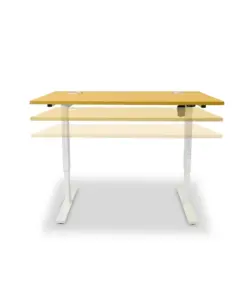
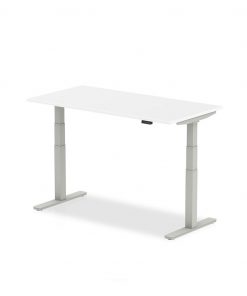
-
Sale!
Electric Ergolift Height Adjustable Desks | In House
- £604.90 – £690.00Price range: £604.90 through £690.00 excl VAT
- Add to Basket This product has multiple variants. The options may be chosen on the product page
-
Sale!
Frequently Asked Questions
How long should I stand at my desk each day?
There is no hard rule, but the consensus among ergonomic experts is to aim for a 50/50 split eventually. However, for beginners, the “20-8-2” rule is popular: sit for 20 minutes, stand for 8 minutes, and move for 2 minutes. The most important thing is to alternate positions frequently rather than staying static in either one.